
Rolling paper GSM: what basis weight does to burn, ash and translucency
GSM is grams per square metre. Why weight, not caliper, is the useful number, what it does to translucency, strength and ash, and the two Skins weights.
- เผยแพร่
- เวลาอ่าน
- อ่าน 6 นาที
- ผู้เขียน
- Skins
บันทึกเป็นภาษาอังกฤษ
Thin is the word the whole category reaches for, and it is almost never defined. A paper described as thin could mean it feels thin, looks thin against the light or measures thin in a micrometer, and those are three different properties. The number that paper-makers actually use, and the one that predicts how a leaf will roll and burn, is basis weight. This note explains what it is, where rolling papers sit on the scale and why Skins builds its range around two weights rather than one.
Grams per square metre
Basis weight, written GSM or g/m², is the mass of one square metre of the paper. It is defined by ISO 536, it is measured by cutting a sample of known area and weighing it, and it is the first line on any paper specification. Ordinary office paper is around 80 gsm. Newsprint is in the forties. Tissue is in the teens. Rolling papers are lighter than all of those.
The reason the industry prefers weight to thickness is that weight is what the paper brings to the burn. Thickness, or caliper, is measured with a micrometer and depends on how tightly the fibres are packed as well as how much fibre there is. Two sheets can measure identical in microns and differ substantially in mass, because one has been calendered hard and the other has not. The heavier sheet has more cellulose per square centimetre: more fuel, a slower and hotter burn front, more ash. Basis weight captures that directly; caliper does not.
Where rolling papers sit
Rolling and cigarette papers occupy the light end of the whole paper spectrum. The category does not publish a single standard, but industry patents describe the working band clearly enough. The USPTO patent on smoking paper sets out typical basis weights for wrapping papers, with the useful range for a hand-rolling leaf sitting roughly between the low teens and the mid twenties of grams per square metre. Papers marketed as ultra-thin are at the bottom of that band. Treat these as approximate: each mill sets its own weights, and each brand chooses where in the band its papers sit.
For a sense of scale, an office sheet is five or six times the weight of an ultra-thin leaf of the same area. That is why a rolling paper reads near-transparent against the light and an office sheet does not. There is simply less material in the way.
What weight changes
Basis weight is the single variable that moves the most properties at once. Four of them matter for a rolling paper.
| Property | Lighter sheet | Heavier sheet |
|---|---|---|
| Translucency | Higher; the leaf reads near-transparent | Lower; the leaf reads opaque or cloudy |
| Strength and grip | Lower; demands long fibre and a steady hand | Higher; forgiving to roll, holds its shape |
| Burn | Faster unless airflow is regulated | Slower, hotter |
| Ash and flavour | Minimal ash, little of the paper's own flavour | More ash, more flavour from the sheet |
Translucency is the most visible. Light passes through a sheet in proportion to how little fibre is in the way and how evenly that fibre is spread, which is why the Skins paper page treats a translucency read as the fastest check of a leaf. Strength runs the other way. A lighter sheet has fewer fibres crossing any given line, so it can only hold together if those fibres are long and well bonded. This is the whole reason ultra-thin papers use long plant fibre rather than short wood pulp, a point covered in the note on rice, hemp and wood-pulp papers.
Burn and ash follow from mass. Less cellulose means less fuel and less residue. The complication is that a light sheet, left to itself, burns fast. The engineering answer is not to add weight back but to regulate the airflow through the leaf, which is what the cross-weave watermark does. The burn note explains the mechanism; the short version is that weight sets the baseline and the watermark sets the pace.
Weight is the one number on a paper specification that changes everything else. Choose it on purpose.
Two weights, one specification
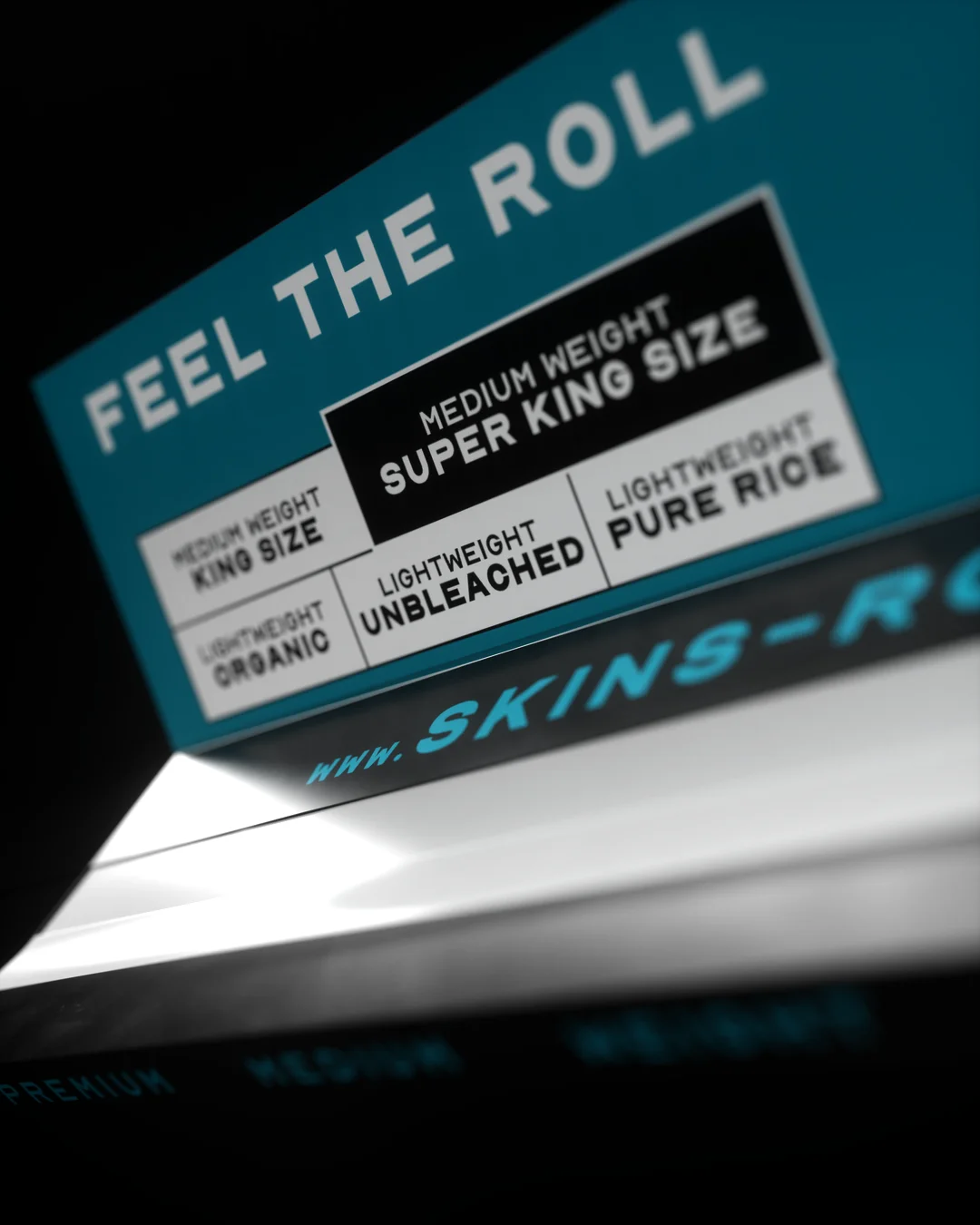
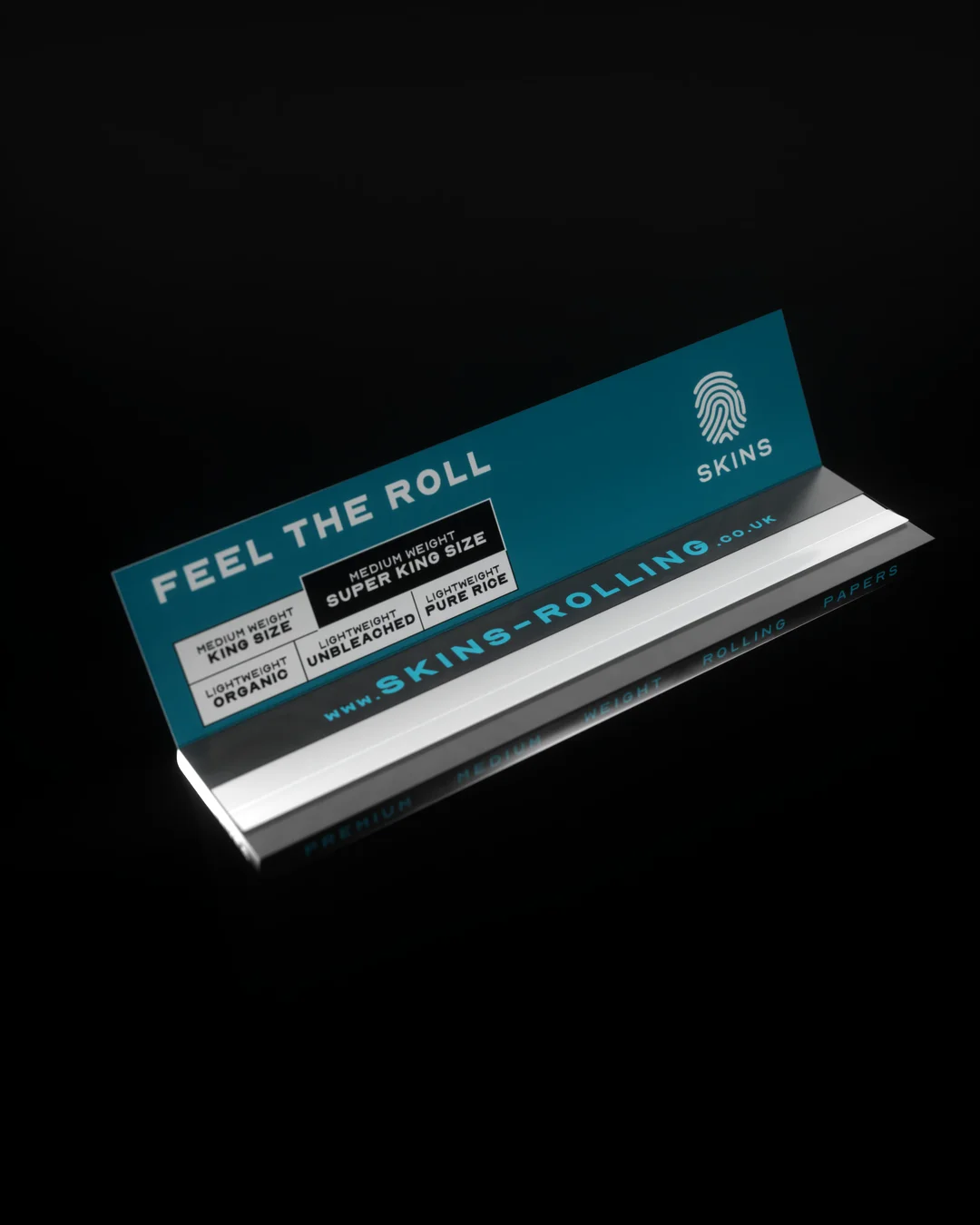
Skins makes its five papers on two basis weights, and the reasoning is that the two ends of the band serve two different rolls. Medium weight is for structure and speed: enough body to roll quickly and hold its shape in the hand, still thin enough to disappear once lit. King Size and Super King Size are on this stock. Lightweight is for the purists: a leaf that reads near-transparent and burns to almost nothing, which asks for more care and rewards it. Organic, Unbleached and Pure Rice are on this stock, with Pure Rice the thinnest leaf in the range.
What Skins does not do is publish a gsm figure for each and treat it as a marketing number. Each weight is held to a tight tolerance at the mill, and each batch is verified against it in the Skins lab before it carries the fingerprint. The point of the tolerance is consistency: a leaf from the last booklet in a box should roll and burn exactly like the first. The full specification is on the technical sheet sent to every stockist through the stock page, and the tests it is checked against are set out on the research page.
Reading weight by hand
You do not need a balance to place a paper on the scale. Three checks get close.
- Hold a leaf to a window. An ultra-thin sheet glows evenly and you can read print through it; a heavier sheet is milky and the print is a shadow.
- Fold a corner and release it. A light sheet springs back softly and holds only a faint crease; a heavy sheet creases hard and stays folded.
- Rub the leaf between finger and thumb. Lightweight paper feels like a membrane with almost no body; medium weight has a discernible surface and a little friction, which is the grip that makes it faster to roll.
None of these replaces a measurement, but they will tell you which side of the band a paper is on, and they will tell you when two papers sold as the same weight are not.
Why the number matters to the trade
For a stockist, basis weight is the fastest way to explain a range across a counter. A customer asking for something they can roll quickly wants medium weight. A customer asking for the thinnest thing on the shelf wants lightweight and should be told it asks for a steady hand. Both are on the technical sheet and both are in the note on rolling with ultra-thin paper. A paper described only as thin gives neither of them anything to go on.
Basis weight is the first number on the specification because it is the one the others depend on. Fibre choice, calendering, watermark and gum are all decisions made in the light of it, and a paper that is honest about its weight is usually honest about the rest.
คำถาม
ก่อนที่คุณจะถาม
01What GSM are rolling papers?
Far lighter than ordinary paper. Office paper is around 80 gsm; rolling and cigarette papers sit in a band that industry patents place roughly between the low teens and the mid twenties of grams per square metre, with ultra-thin papers at the bottom of that band. Each brand sets its own weights.
02Is a thinner rolling paper better?
It depends on what you want from the leaf. A lighter sheet is more translucent, burns to less ash and adds less of its own flavour, but it asks for more care when rolling. A heavier sheet gives structure and speed. Skins makes both weights to the same specification so the choice is yours.
03Why do papers quote GSM rather than thickness in microns?
Because weight is what the paper actually contributes to the burn. Two sheets can share a thickness and differ in density; the heavier one has more cellulose to burn and more to leave behind. Grams per square metre captures that; a micrometer reading does not.
แหล่งข้อมูล
ที่มาของข้อมูล
ตรวจสอบแหล่งข้อมูลเมื่อ 26 ส.ค. 2569 บันทึกด้านกฎหมายเป็นข้อมูลทั่วไป ไม่ใช่คำแนะนำทางกฎหมาย โปรดยืนยันกับที่ปรึกษากฎหมายก่อนดำเนินการ
- 01Wikipedia: Grammage (basis weight, ISO 536)
- 02USPTO patent 6138684: Smoking paper for smoking article (basis weight and permeability ranges)
- 03USPTO patent 7282249: Pads of cigarette rolling papers (leaf construction and interleaving)
- 04Wikipedia: Paper machine (forming, pressing, drying and calendering)
บันทึกที่เกี่ยวข้อง
อ่านต่อ
วิทยาศาสตร์ของกระดาษทุกตลาด
Why a rolling paper burns unevenly, and what the watermark does about it
What happens at the burn front, why papers run, and how basis weight, formation and the cross-weave watermark keep the burn slow and even, no additives.
อ่าน 7 นาที
วิทยาศาสตร์ของกระดาษทุกตลาด
How ultra-thin rolling paper is made: from Alcoy to the calender
From long plant fibre to a 55-leaf booklet: pulping, the paper machine, the dandy roll that presses the watermark, calendering, gumming, then the lab.
อ่าน 6 นาที
วิทยาศาสตร์ของกระดาษทุกตลาด
Rice vs hemp vs wood-pulp rolling papers: fibre, feel and burn
Rice straw, hemp, flax and wood pulp each make a different leaf. How fibre length changes translucency, grip, burn and ash, with a side-by-side table.
อ่าน 6 นาที