
Are rolling papers legal in Thailand? The 2026 position
Yes. Papers sit outside the Tobacco Products Control Act's definition, so its age, advertising and display rules do not apply on their face. What does.
- Publié
- Mis à jour
- Temps de lecture
- 6 min de lecture
- Auteur
- Skins
Note en anglais
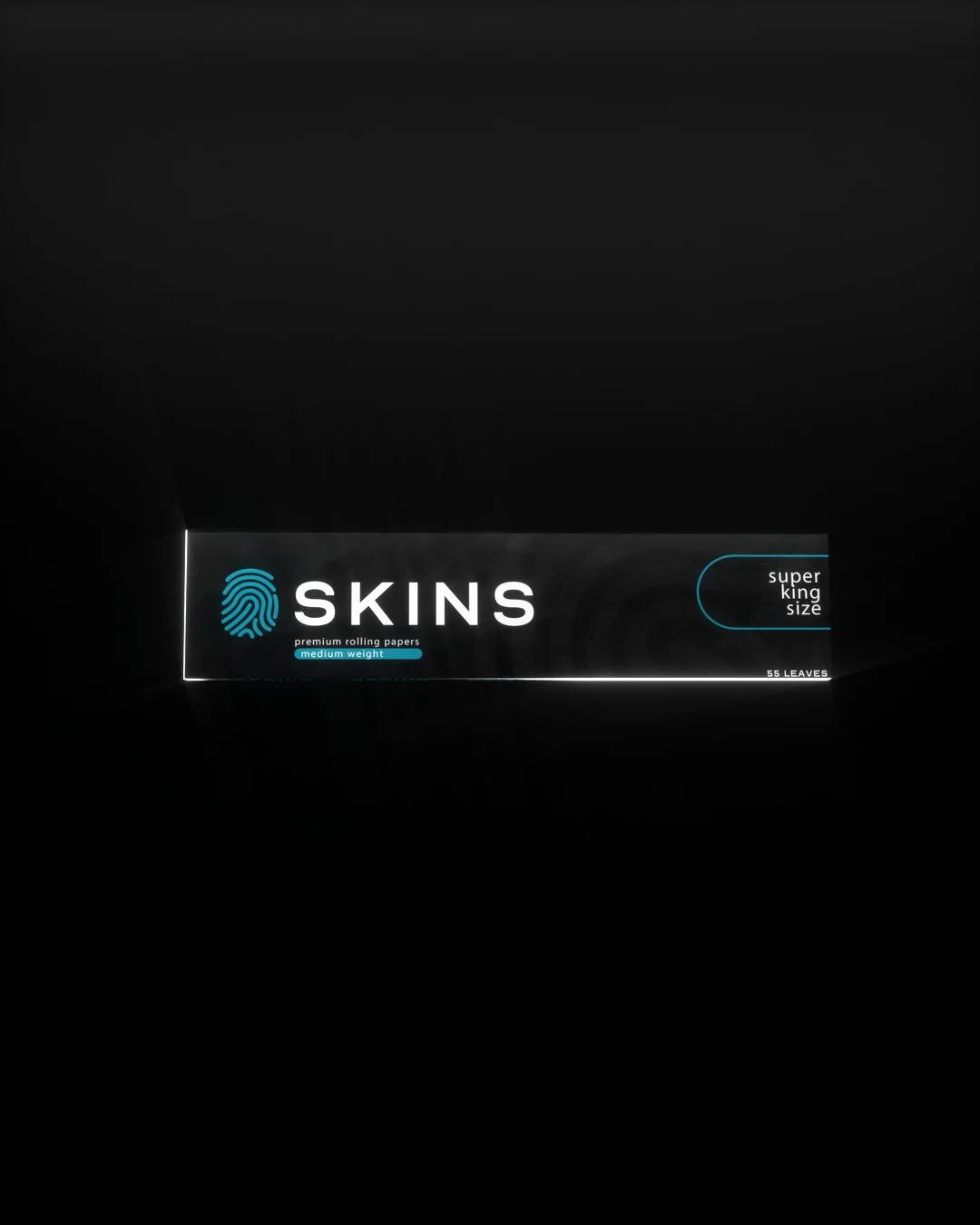
Thailand has one of the strictest tobacco-control statutes in the region and a cannabis position that has changed three times in four years. Rolling papers sit in a specific place between the two, and the place is more straightforward than the surrounding noise suggests. This note sets out the position as verified on 5 September 2026. Rolling papers are a tobacco accessory. Skins sells papers only and makes no claims about cannabis. The note is information, not legal advice; confirm with Thai counsel before acting on it.
The short answer
Yes, rolling papers are legal in Thailand, and they are legal as an ordinary consumer good rather than as a regulated tobacco product. The reason is definitional. Section 4 of the Tobacco Products Control Act B.E. 2560 defines a tobacco product as one containing tobacco leaf or Nicotiana tabacum, including any other product containing nicotine that is consumed by smoking, sucking, inhaling, chewing, eating, blowing or spraying, excluding medicines. The Act makes no reference to cigarette paper, accessories or components. A Skins leaf is fibre, gum and water, as the note on what a rolling paper is made of sets out, so it falls outside the definition.
Skins' research rates the statutory reading high confidence and the way officials treat papers in practice medium, because enforcement against accessories is not documented in published sources. That distinction runs through everything below.
What does not apply, on its face
Because papers are outside the definition, the Act's main restrictions do not bind them as written. The Thailand market page carries the full readout; the table is the summary.
| Provision | What it does for tobacco products | Applies to rolling papers |
|---|---|---|
| s.26 minimum age 20 | No sale to anyone under 20 | Not by statute; Skins applies 20 as policy |
| s.27 sale methods | Bans vending machines and electronic-channel sales | Not on its face |
| s.30 advertising | Bans all advertising and marketing communication | Not on its face, with the caution below |
| s.31 brand display | Bans tobacco names and logos across media and events | Not on its face |
| s.32 and s.33 brand-sharing | Bans use of tobacco brands on other goods | Not on its face; Skins stays a paper brand only |
| s.36 retail display | Bans display of tobacco products at point of sale | Not on its face |
| s.38 packaging | Health warnings and pack rules | Not on its face; no warnings should be added voluntarily |
The age of 20 deserves a sentence. There is no statutory age for buying papers in Thailand, but section 26 sets 20 for tobacco products and the 2022 cannabis notification also uses 20. Skins applies 20 by policy, gates the Thai site at 20, and asks its retailers to do the same. It is a brand rule, aligned with the law around it, and the Thai pack carries a recommended 20+ statement.
Papers are outside the Act. The way to stay outside it is to never let a tobacco product, brand or image into the frame.
The caution on advertising
The Act's advertising and brand-display provisions are drafted widely: section 4 defines marketing communication to include promotion, news dissemination, point-of-sale demonstration, direct selling and cyber marketing, and section 31 lists electronic media, computer networks and advertising boards. Penalties for manufacturers, importers and agencies run to a year's imprisonment and fines of not less than THB 1.5 million.
Skins may market the paper itself. What it must never do is show, name or allude to a tobacco product or brand, depict smoking, or encourage tobacco consumption, because any of those risks the creative being characterised as tobacco marketing communication whatever the product is. In practice this is the same discipline the brand applies everywhere: product, paper science, lab verification, stockists, and nothing else. Paid social and search are closed by platform policy in Thailand as elsewhere, so the route to market is retail, trade and owned channels, which the stock page and partners page serve.
Cannabis, stated once
The cannabis position is the part of the Thai picture most likely to change, and it does not alter the legality of papers. Cannabis was removed from the Category 5 narcotics list on 9 June 2022. Since 26 June 2025, under the Ministry of Public Health's Notification on Controlled Herbs, cannabis flower is a controlled herb sold only against a practitioner's prescription for medical purposes, from licensed premises; recreational sale is prohibited, public smoking is a public-nuisance offence, and a draft Cannabis and Hemp Act remained before Parliament at the research date, with ministers having said cannabis would eventually return to the narcotics list. Skins rates the current regime high confidence and any forecast low. Skins sells rolling papers only, makes no claims about cannabis, and keeps every Thai-facing asset free of any reference to it.
What does apply: consumer labelling
Imported goods for sale are label-controlled under the Consumer Protection Act B.E. 2522. The label must be in Thai, with a translation permitted alongside foreign text, and state the product name or category, the trademark, the importer's name and address, the country of manufacture, the quantity, the price in baht, and any usage instructions or cautions, with the manufacture or import date where practicable. Announcement of the Committee on Labels No. 3, in force from 18 June 2023, sets a minimum text height of 2 mm, or 1.5 mm where the label is under 35 square centimetres. A Thai-language sticker applied by the importer before retail is an accepted route. Penalties for non-compliant labels run to THB 50,000 and one month.
Claims must match. "Chlorine-free", "natural gum", "ultra-thin" and "UK-lab verified" must read identically in Thai and English and be supported by the laboratory report, which is what the six-test protocol produces for every batch.
Import and duty
Rolling paper in booklets is classified under AHTN heading 4813, subheading 4813.10. The applied MFN rate could not be confirmed from an official source at the research date, which Skins rates low confidence and resolves with a broker confirmation or a Customs advance ruling. There is no EU-Thailand preference; the free trade agreement was still in negotiation. VAT is 7 percent on the CIF value plus duty, and papers attract no tobacco excise on the published categories.
The practical change for 2026 is the parcel rule. From 1 January 2026 Thailand removed the THB 1,500 duty-free threshold for e-commerce imports, so duty and VAT are collected from the first baht. Direct-to-consumer shipping from Europe is fully dutiable, and the working model is a Thai importer of record with bulk clearance, supplying retailers in Bangkok first, then Chiang Mai, Phuket and Pattaya. The note on becoming a stockist or distributor covers the enquiry; the UK position is the useful contrast, a market where papers are a named restricted item rather than an ordinary good.
Questions
Avant de demander.
01Are rolling papers legal in Thailand?
Yes. Rolling papers are an ordinary consumer good. The Tobacco Products Control Act B.E. 2560 defines a tobacco product as one containing tobacco leaf, Nicotiana tabacum or nicotine, and papers contain none of those, so the Act's restrictions do not apply to them on their face. They carry Thai consumer labelling instead.
02What is the minimum age to buy rolling papers in Thailand?
There is no statutory age for papers. The Act sets 20 for tobacco products under section 26, and Skins and its retailers apply the same age of 20 as policy.
03Can rolling papers be shipped to Thailand from abroad?
Commercially, yes, through a Thai importer of record. Since 1 January 2026 there is no duty-free threshold for e-commerce parcels, so duty and 7 percent VAT are charged from the first baht; direct-to-consumer parcels from Europe are fully dutiable.
04Is cannabis legal in Thailand in 2026?
Cannabis was removed from the narcotics list in June 2022, but since 26 June 2025 cannabis flower is a controlled herb sold only against a practitioner's prescription. Recreational sale is prohibited, public smoking is a nuisance offence, and further legislation was pending at the research date. Skins sells rolling papers only and makes no claims about cannabis.
Sources
D’où cela vient.
Sources consultées le 5 sept. 2026. Les notes juridiques sont de l’information, pas un avis; confirmez auprès d’un conseiller juridique avant d’agir.
- 01Tobacco Products Control Act B.E. 2560 (2017), unofficial English translation (SEATCA): s.4 definitions, s.26 sale age, s.30 to s.33 advertising, s.36 display
- 02Tobacco Control Laws: Thailand minimum legal sales age (20, Article 26)
- 03Tilleke and Gibbins: Thailand's new cannabis controls (Notification on Controlled Herbs, 26 June 2025)
- 04Tilleke and Gibbins: Thailand's new labelling readability requirements (Committee on Labels No. 3)
- 05Forvis Mazars: Thailand import duty on all online purchases from 2026 (THB 1,500 threshold removed)
- 06PwC Worldwide Tax Summaries, Thailand: other taxes (VAT 7 percent to 30 September 2027)
Notes connexes
À lire ensuite.
Loi et âgeRoyaume-Uni
Rolling papers in the UK: age 18, the 2026 Act and what changes on 1 January 2027
Cigarette papers are age-restricted at 18 today. From 1 January 2027 the Tobacco and Vapes Act 2026 replaces that with a birth-date test. What changes.
6 min de lecture
Loi et âgeCanada
Rolling papers in Canada, province by province: age and retail (2026)
Papers are tobacco products under federal law with a floor of 18. Most provinces set 19, PEI 21. The 13-row table, the accessory test and packaging.
6 min de lecture
CommerceTous les marchés
How to become a rolling-paper stockist or distributor
The two trade routes into Skins, what arrives within two working days, what a distributor receives, age-of-sale and import basics, and a checklist.
6 min de lecture