
Rice vs hemp vs wood-pulp rolling papers: fibre, feel and burn
Rice straw, hemp, flax and wood pulp each make a different leaf. How fibre length changes translucency, grip, burn and ash, with a side-by-side table.
- Publié
- Temps de lecture
- 6 min de lecture
- Auteur
- Skins
Note en anglais
Every rolling paper starts as plant fibre in water, but the plant matters. Rice straw, hemp, flax and wood pulp each produce a sheet with its own length of fibre, its own texture in the hand and its own behaviour once lit. The differences are real, they are physical rather than mystical, and they explain most of what people mean when they say one paper feels better than another. This note takes the four fibres in turn, puts them side by side, and then says where the Skins range sits.
Fibre length is the whole story
Before the individual plants, one principle. Paper holds together because fibres overlap and bond where they cross. The longer the fibres, the more crossings per unit area, and the stronger a sheet can be at a given weight. That is what allows a rolling paper to be a fraction of the weight of office paper and still roll without splitting, a point set out in the note on basis weight.
Long fibre has a second effect. Fewer, longer fibres lie flatter and pack more evenly than a mass of short ones, so the sheet is better formed, more translucent and burns more evenly. Everything that follows about the four materials is, at root, a statement about their fibre.
Rice straw
Rice paper for rolling is made from rice straw, the stalk left in the field after harvest. Pulped and refined, the fibre is short but extremely fine, and it forms a very smooth, very dense sheet that can be made thinner than anything else in the category. Held to the light, a rice leaf is close to transparent.
That fineness is its virtue and its cost. Rice papers are the thinnest on the shelf, they burn slowly because the sheet is dense and low in permeability, and they leave almost nothing behind. They also have the least flavour of any fibre, which is why they are the choice of people who want to taste nothing of the paper. The cost is grip: the surface is smooth and the leaf has little body, so it asks for a steady hand. The Skins paper page is candid that Pure Rice rewards care, and the note on rolling with ultra-thin paper is written largely for it.
Hemp
Hemp rolling paper is made from the bast fibre of industrial hemp, a fibre crop grown for rope, textile and paper since antiquity. It is worth stating once, plainly, that this is the fibre plant and nothing else: hemp paper is cellulose, and the word on the pack describes the crop the fibre came from.
Hemp fibre is long and strong, which makes it easy to form into a durable sheet at low weight. The leaf has a little more body than rice and a slightly textured surface, which gives it grip when rolling. It burns a touch faster than rice at the same weight because the sheet is more open, and it can carry a faint, slightly sweet note of its own unless the fibre is very well refined. Hemp papers are usually sold unbleached, keeping the natural tone of the pulp; the bleaching note explains why that colour is a processing choice rather than a fibre property.
Flax
Flax is the fibre the European rolling-paper industry was built on. The town of Alcoy in Spain began making cigarette paper from linen rag in the eighteenth century, and flax remained the reference fibre for fine papers well into the twentieth. It is a bast fibre like hemp, long and strong, and it forms a sheet that is thin, even and neutral in flavour. In the hand it sits between rice and hemp: more body than rice, smoother than hemp.
Flax is less common on packs today because it is expensive to grow and process, but it remains the fibre many mills reach for when the target is a very thin, very even, very neutral leaf. Much of what is sold as natural plant fibre paper in the premium end of the category is flax or a flax-led blend.
Wood pulp
Wood pulp is the material of ordinary paper, and it is the most common fibre in the rolling-paper category by volume. Kraft pulping breaks softwood into short fibres that are cheap, abundant and easy to form. A wood-pulp leaf is the most forgiving to roll: it has body, it creases cleanly and it holds its shape.
The trade-off is in everything else. Short fibres cannot make a strong sheet at very low weight, so wood-pulp papers tend to be heavier, more opaque and quicker to burn. Mills often compensate with mineral fillers for body and burn additives for evenness, which add ash and flavour. Raw wood pulp is brown from lignin and is usually bleached white; the note on what a paper is made of lists what that process can leave in the sheet.
The fibre decides the ceiling. Refining, weight and watermark decide how close the leaf gets to it.
Side by side
| Fibre | Fibre length | Translucency | Grip when rolling | Burn at equal weight | Ash | Flavour of its own |
|---|---|---|---|---|---|---|
| Rice straw | Short, very fine | Highest | Lowest | Slowest | Minimal, pale | Least |
| Hemp | Long | High | Good, slightly textured | Moderate | Low, pale | Faint unless well refined |
| Flax | Long | High | Moderate, smooth | Slow to moderate | Low, pale | Very little |
| Wood pulp | Short | Lowest | Highest | Fastest | Higher, often grey with filler | Noticeable, more if bleached |
The table describes tendencies, not guarantees. A well-refined, well-formed leaf from any fibre will beat a poorly made leaf from the fibre above it. The mill's process matters as much as the crop, which is the subject of the note on how ultra-thin paper is made.
Where the Skins range sits
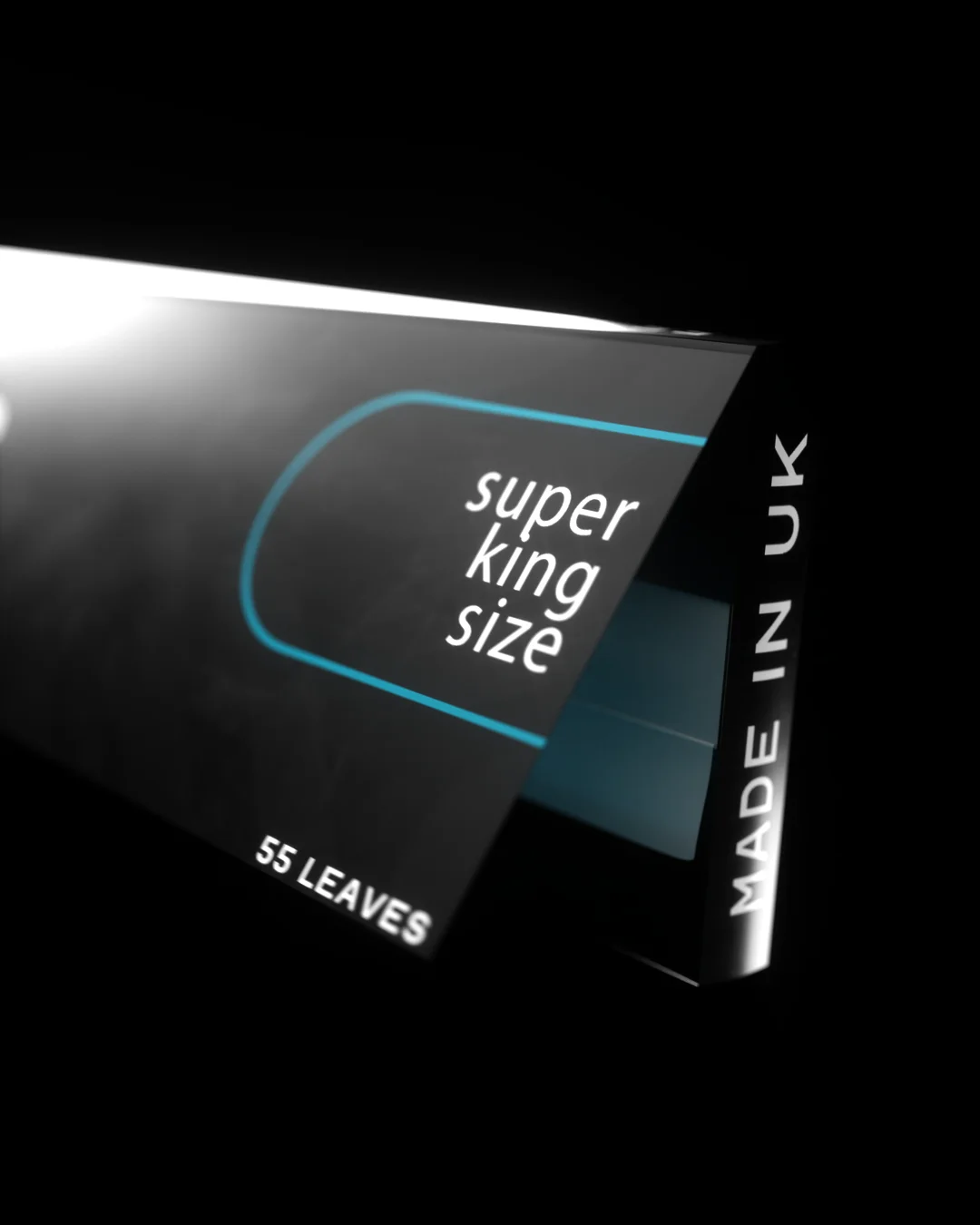
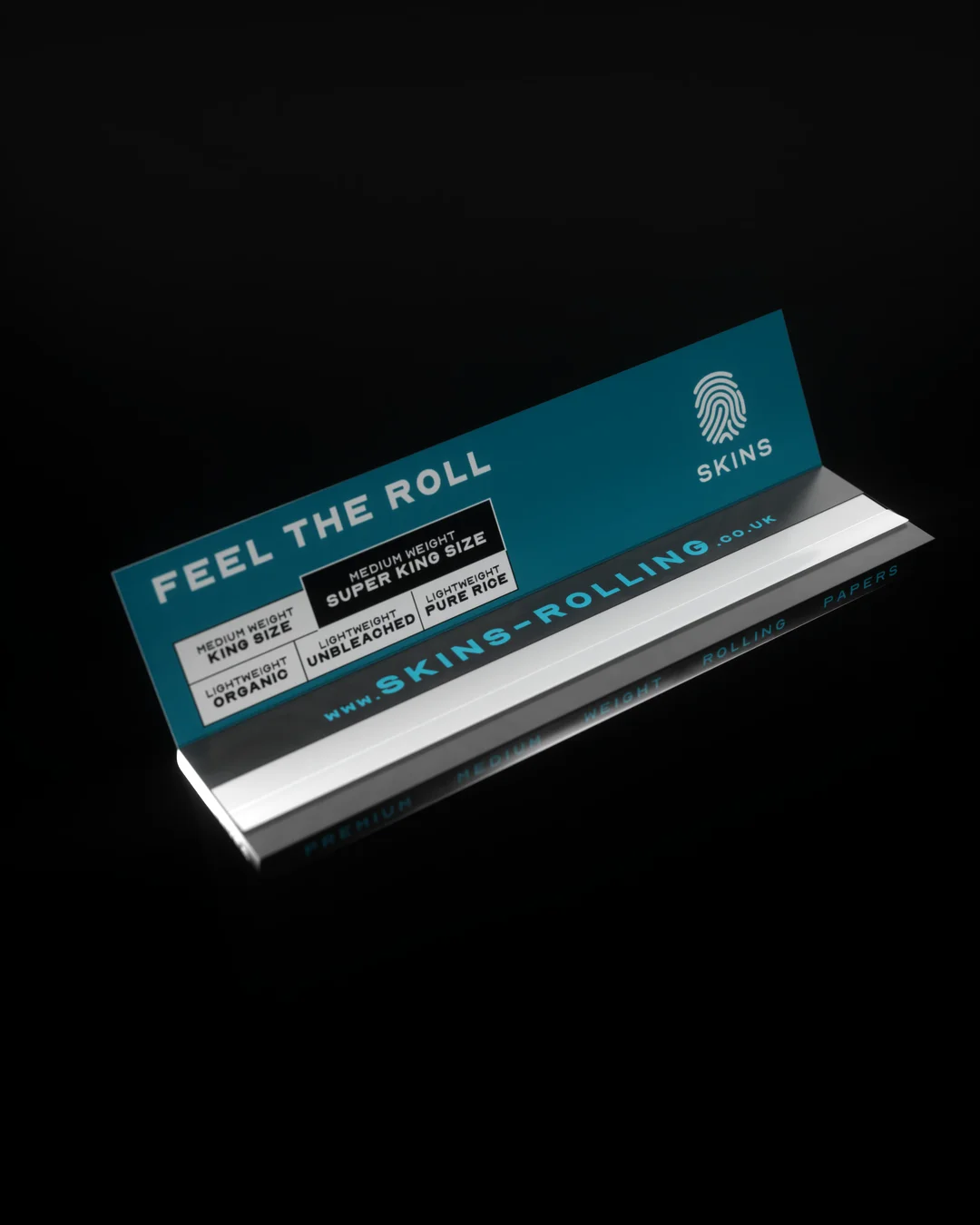
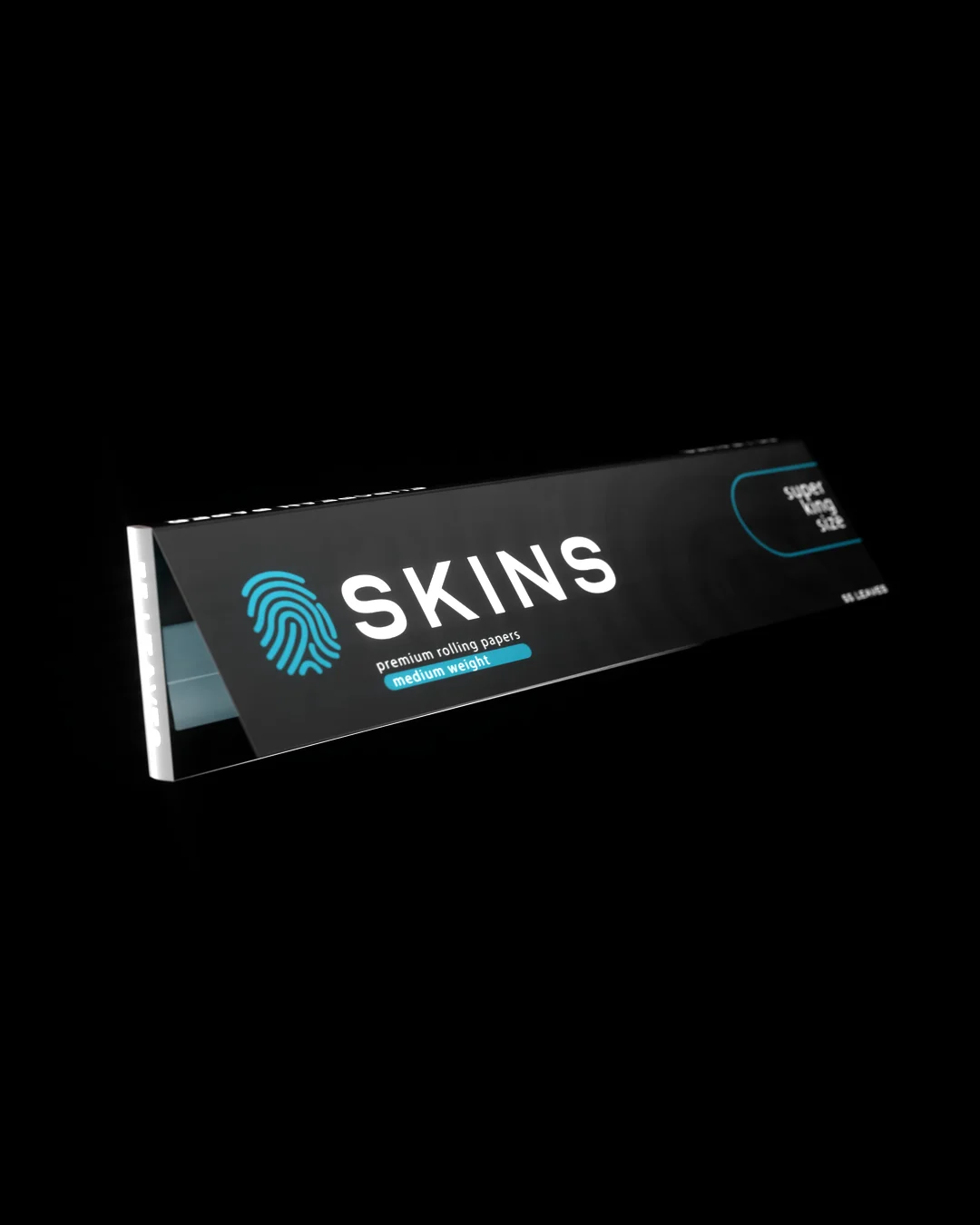
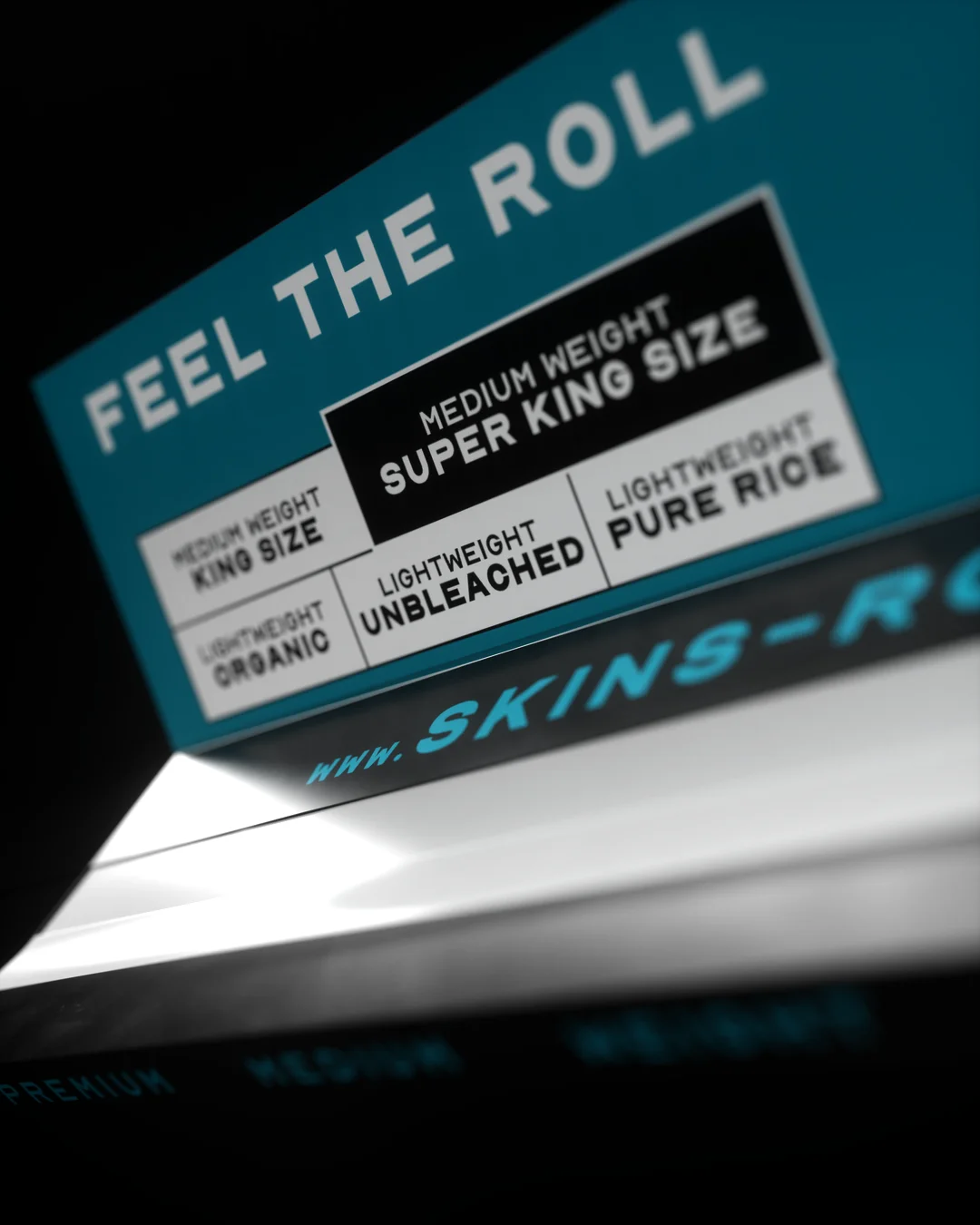
Skins makes five papers on two basis weights, and the fibre changes across the lightweight papers. Pure Rice is rice fibre calendered to near-transparency, the thinnest leaf in the range, with a slow burn and a residue that barely registers. Organic is certified organic plant fibre, unbleached and undyed, carrying the natural tone of the fibre. Unbleached is unbleached plant fibre left exactly as it comes off the machine. King Size and Super King Size, the two medium-weight papers, are natural plant fibre refined and calendered ultra-thin, in a natural white, with a slow and even burn.
What does not change is the rest of the specification. Every paper in the range carries the same natural gum strip, the same cross-weave watermark pressed at the mill, the same chlorine-free processing and the same 55 leaves a booklet, and every batch passes the same six tests in the Skins lab described on the research page. The fibre is the variable that is yours to choose. The standard is not.
Choosing across a counter
For a stockist, the fibre question is the one customers ask most often, and the honest answer is short. Rice for the thinnest, most neutral leaf and a steady hand. Plant fibre at medium weight for structure and speed. Organic or unbleached for the fibre left in its natural state. The full comparison is on the technical sheet that comes with a first order through the stock page, and the sample booklet is there so the paper can be judged in the hand rather than on a page.
Questions
Avant de demander.
01Are rice rolling papers really made of rice?
They are made from rice straw, the stalk left after the grain is harvested, pulped and refined into a very fine, very thin sheet. No rice grain is involved. The name describes the plant the fibre came from, not the finished material.
02Is hemp paper the same as hemp anything else?
Hemp rolling paper is made from the bast fibre of the industrial hemp plant, a fibre crop grown for textiles, rope and paper. It is a long, strong plant fibre in the same family as flax. The paper contains fibre only.
03Which fibre is best for rolling papers?
There is no single answer. Rice straw gives the thinnest, most neutral leaf but the least grip. Hemp and flax give strength and a little texture at a slightly higher weight. Wood pulp is the most forgiving and the least refined. Skins makes papers on rice fibre, certified organic plant fibre and natural plant fibre so the choice sits with the roller.
Sources
D’où cela vient.
Sources consultées le 27 août 2026. Les notes juridiques sont de l’information, pas un avis; confirmez auprès d’un conseiller juridique avant d’agir.
Notes connexes
À lire ensuite.
Science du papierTous les marchés
What is rolling paper made of? Fibre, gum and water
A rolling paper is plant fibre, a strip of natural gum and the water that carried them. What each does, and the six additives a good leaf leaves out.
7 min de lecture
Science du papierTous les marchés
Unbleached vs bleached rolling papers: what chlorine-free actually means
Why raw pulp is brown, what chlorine, ECF and TCF bleaching each do, what chlorine-free means, and whether an unbleached leaf burns any differently.
6 min de lecture
Science du papierTous les marchés
Rolling paper GSM: what basis weight does to burn, ash and translucency
GSM is grams per square metre. Why weight, not caliper, is the useful number, what it does to translucency, strength and ash, and the two Skins weights.
6 min de lecture